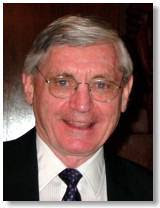
There may be interested in reading an essay, A Call To Religious Life Worldwide, on the crisis in numbers in religious orders written by Jose Maria Vigil, a priest from Spain working in Central America, who uses the SEE, JUDGE, ACT methodology to try to determine ways to address the present trend. Below is one of his concluding paragraphs. To read the whole essay go to
http://eapi.admu.edu.ph/eapr006/josemariavigil.htm
This is not the time to pause and listen nostalgically to the hymn Nearer, My God, To Thee being sung on the stern of the Titanic. We have to learn how to move beyond the past and launch out into the future. We have to stop trying to fix what cannot be fixed and clothe ourselves in new life.
Re-establish or recast? We see that re-establishment is not the answer. The events of the past 15 years show the failure of the attempts of re-establishment within the system. We must recast the heavy metal that weighs us down, recast it in the furnace, form new molds, recast it outside the system so that instead of being crushed it can have a possible future. We do not need any more attempts at re-establishment, of repeating the past; what we need is a mutation, a substantial change.
Showing posts with label future of religious life. Show all posts
Showing posts with label future of religious life. Show all posts
Tuesday, June 22, 2010


Sunday, August 2, 2009
Reflections on the Common Bond weekend
Reflections on the 2009 Common Bond meeting
Several hundred former members of the Society of Mary met at the University of Dayton recently for a weekend of remembrance, reflection and ritual. All seemed to agree that it was a great success and there was general concurrence that Common Bonders and members of the Society of Mary have much in common.
What can religious life learn from the fact that hundreds of highly trained, talented and gifted individuals started on the path to perpetual membership and, having determined that it was not the right path for them, were separated from the Great Project, the Society of Mary?
A good education has allowed these men to make outstanding contributions to church and society not only through their own efforts but also through the outstanding families they have produced.
Many members of Common Bond indicate that their initial formation in the postulate, novitiate and as vowed members has had a profound influence on their lives. They consider those years as a strong foundation for what they have been able to achieve in life. Many still pursue our common mission.
Unfortunately the Society of Mary has moved on without their participation even though it invested significant resources in their formation. How can this not be considered a great loss for the mission of the Society? In the past we had sufficient numbers joining which did not require us to reflect on the consequence of the great loss we had experienced.
Speculation about what could have been accomplished had these men continued membership or at least had continued an official relationship may not be a fruitful exercise, but speculation about what could be with a new and creative relationship between the Society and Common Bond members may be appropriate as we continue to strategize how we can continue our mission with ever decreasing numbers of perpetually professed.
The future of religious life, and in particular the Society of Mary in its present form, is in jeopardy. A continuing future may be related to the need to change the idea that making perpetual vows is the basic requirement for membership.
Several hundred former members of the Society of Mary met at the University of Dayton recently for a weekend of remembrance, reflection and ritual. All seemed to agree that it was a great success and there was general concurrence that Common Bonders and members of the Society of Mary have much in common.
What can religious life learn from the fact that hundreds of highly trained, talented and gifted individuals started on the path to perpetual membership and, having determined that it was not the right path for them, were separated from the Great Project, the Society of Mary?
A good education has allowed these men to make outstanding contributions to church and society not only through their own efforts but also through the outstanding families they have produced.
Many members of Common Bond indicate that their initial formation in the postulate, novitiate and as vowed members has had a profound influence on their lives. They consider those years as a strong foundation for what they have been able to achieve in life. Many still pursue our common mission.
Unfortunately the Society of Mary has moved on without their participation even though it invested significant resources in their formation. How can this not be considered a great loss for the mission of the Society? In the past we had sufficient numbers joining which did not require us to reflect on the consequence of the great loss we had experienced.
Speculation about what could have been accomplished had these men continued membership or at least had continued an official relationship may not be a fruitful exercise, but speculation about what could be with a new and creative relationship between the Society and Common Bond members may be appropriate as we continue to strategize how we can continue our mission with ever decreasing numbers of perpetually professed.
The future of religious life, and in particular the Society of Mary in its present form, is in jeopardy. A continuing future may be related to the need to change the idea that making perpetual vows is the basic requirement for membership.
Wednesday, January 14, 2009
The Future of the Society of Mary in the US
The following was written by Larry Cada, S.M., co-author of Shaping the Coming Age of Religious Life, Seabury Press, 1979.
The Future of the SM in the United States
by Lawrence Cada, SM
What is the future of the SM in the United States? Thirty years ago Ray Fitz and I were wondering about this question, when it was clear that the Society was undergoing large changes in the years following Vatican II. From 1817 to 1967 there had been a steady, year-by-year increase in SM membership; 1967 was the first year in the Society's history that the number of members dropped. That drop continued into the 70s. The number is still dropping, but not as sharply.
At the time, Ray and I were serving on the Formation Team of the Cincinnati Province. In 1971, we invited Dave Fleming to be the main speaker at a Province Formation Weekend in Dayton. He gave an excellent presentation in which he divided the history of religious life into five ages, each of which was separated from the next by a period of dramatic change during which a new paradigm of religious life replaced that of the preceding age. Each age lasted several centuries that were dominated by that age's reigning paradigm. Eventually, though, as history moved on, the paradigm proved inadequate and fell apart. One of the things that often happened at these past turning points in the history of religious life was that the total number of religious dropped and many religious orders went extinct. The most recent such turning point, according to Dave, was the time of the French Revolution.
Dave's explanation of the changes we were all experiencing in the SM in the United States was that we had entered into one of these periods of dramatic change. The old paradigm we had all known and loved was passing away. As in the past, the number of religious was plummeting, and many religious orders would disappear with the old paradigm. We were entering into a time of waiting for the birth pangs of a new paradigm. After a period of collapse, new orders were going to emerge which would disclose the main lines of some new paradigm that was going to dominate the coming age of religious life.
Dave's presentation had a dramatic impact on me. To verify his lucid explanation, I began to read up on the history of religious life in far greater depth than I had until then. I found out that there were indeed religious orders that had gone extinct (such as the Gilbertines and Williamites) and that the last time there had been a sharp drop in the number of religious was the French Revolution during Chaminade's lifetime. Ray and I put together an article about all these ideas, which was published in Review for Religious and later expanded into the book Shaping the Coming Age of Religious Life with the help of Tom Giardino, Gert Foley (SC), and Carol Lichtenberg (SNDdeN).
That was 30 years ago. Where do we stand today? In particular, where does the SM in the United States stand today? Our book treated the whole of religious life—worldwide, all religious orders, both men and women religious. When we focus on the SM in the US, it's clear that we follow the general pattern. Our numbers have diminished and are still dropping. Are we going to go extinct, like religious orders of the past did?
The old paradigm—the Paradigm of the 50s—is gone. Older Marianists among us still remember it. Back then there was a string of vibrant boys' high schools that stretched across the country from coast to coast, and even to Hawaii. These Marianist schools had a distinctive spirit of which we were genuinely proud. The SM world was a school world. Our schools matched the intellectual excellence of Jesuit schools in the same city where they were located. They competed successfully in athletic prowess with the best of their rivals. The faculty at these schools was made up almost entirely by members of the SM. Typically, 30 or 40 brothers and priests conducted the school with the assistance of two or three laymen. The Marianists all dressed in black. They lived in a faculty house next to the school. They followed a common daily timetable tailored to let them put in a full day's service in the school. They thought of themselves and were regarded by others as an elite. The prevailing theology of religious life held that the evangelical vows raised members of religious orders to a higher place in the church—higher even than the place of diocesan priests. Members of the SM did not gloat about this, but they believed it; and it contributed to the love they had for the Society and their willingness to dedicate a lifetime to its work—the running of a chain of top-notch American Catholic boys' high schools.
Today, many of these schools are still here. However, there are almost no members of the SM on their staffs. Quite a few of them have merged with nearby girls' schools. We have merged four provinces into one. There is a small number of new members joining the SM in the US, but all the signs seem to indicate that we are following the historical trend of decline along with almost all the other religious orders. Is there anything that gives us pause and permits us to not conclude that this hopeless trend of decline is our inevitable fate?
I think there is. Personally, I know that I do not feel hopeless. Recently I have found myself explaining to various persons and in various places why I don't feel negative about the future. For starters, I am quite encouraged by the conversations I have with the newest members of the SM about why they want to join the Society and their hopes for its future. Their numbers may be small, but they are free of nostalgic memories and pining for the Paradigm of the 50s. It's a tonic to speak with them. No doubt most of us find such conversations refreshing.
Here are two developments where I think we can find clues about the future of the SM in the United States: 1) Marianist lay communities in the US and 2) the commitment as lay Marianists made by a small group of students graduating from UD last April. The first development is a process that's been going on for the last 50 years; the second, for only a year or two.
During the years since World War II, there has been a steady growth in the number of lay communities of the Marianist Family in the United States. Gradually, adult sodalities or Marianist lay communities, as we now call them, have matured and are maturing. Local groups have taken root and are in the process of linking with one another in various networks and organizations. There is a partnership emerging between Marianist lay communities, the Society, and the Daughters of Mary in the United States. At the moment, there is still a lot of financial support that the lay Marianist communities get from the SM. Here and there, I hear reports of distress about this fact from some lay Marianists; but I think the day will come, after a few years, when lay Marianists will get the hang of fund raising and be financially independent of the SM. By then lay Marianists and religious Marianists in the country will be teaming up to tackle some of the great questions that need work in the Church and in the country—especially in works of social justice. Out of this will probably come some new large-scale ministry for the SM, one which will be as thrilling as running schools was in the Paradigm of the 50s.
Last April's commitment of 16 UD graduates as lay Marianists caught my attention. In a ceremony at the University chapel, each of these young people declared publicly his or her intention to be a Marianist as a lay person in today's Church and world. (See Family Online, May 9, 2006.) Any member of the SM reading through the texts of these declarations will find an expression of sentiments quite familiar and quite Marianist. The declarations frequently mention Mary and her spirit as a source of inspiration. They breathe a Marianist zeal, which will remind any member of the SM who reads them of how he felt at the time of his first vows. An intriguing aspect of this event is the fact that it was shepherded by Joan McGuinness Wagner. Joan is herself a lay Marianist. She belongs to a Marianist lay community in Dayton and has various Marianist-related jobs in and near the University. Of course, the young people who made their commitments in the April ceremony know various Marianist religious in the ambit of the University. But how did it come about that the person who guided this development to fruition is a lay Marianist who has somehow communicated her contagious love and dedication to the Marianist vision?
Both of my examples involve lay members of the Marianist Family. This fact underscores my intuition that partnership with lay Marianist will play a large role in the future of the SM in the United States. But this should not be so difficult for us to envision. After all, did not the SM arise out of Chaminade's activity with lay Marianists for some 20 years before 181
The Future of the SM in the United States
by Lawrence Cada, SM
What is the future of the SM in the United States? Thirty years ago Ray Fitz and I were wondering about this question, when it was clear that the Society was undergoing large changes in the years following Vatican II. From 1817 to 1967 there had been a steady, year-by-year increase in SM membership; 1967 was the first year in the Society's history that the number of members dropped. That drop continued into the 70s. The number is still dropping, but not as sharply.
At the time, Ray and I were serving on the Formation Team of the Cincinnati Province. In 1971, we invited Dave Fleming to be the main speaker at a Province Formation Weekend in Dayton. He gave an excellent presentation in which he divided the history of religious life into five ages, each of which was separated from the next by a period of dramatic change during which a new paradigm of religious life replaced that of the preceding age. Each age lasted several centuries that were dominated by that age's reigning paradigm. Eventually, though, as history moved on, the paradigm proved inadequate and fell apart. One of the things that often happened at these past turning points in the history of religious life was that the total number of religious dropped and many religious orders went extinct. The most recent such turning point, according to Dave, was the time of the French Revolution.
Dave's explanation of the changes we were all experiencing in the SM in the United States was that we had entered into one of these periods of dramatic change. The old paradigm we had all known and loved was passing away. As in the past, the number of religious was plummeting, and many religious orders would disappear with the old paradigm. We were entering into a time of waiting for the birth pangs of a new paradigm. After a period of collapse, new orders were going to emerge which would disclose the main lines of some new paradigm that was going to dominate the coming age of religious life.
Dave's presentation had a dramatic impact on me. To verify his lucid explanation, I began to read up on the history of religious life in far greater depth than I had until then. I found out that there were indeed religious orders that had gone extinct (such as the Gilbertines and Williamites) and that the last time there had been a sharp drop in the number of religious was the French Revolution during Chaminade's lifetime. Ray and I put together an article about all these ideas, which was published in Review for Religious and later expanded into the book Shaping the Coming Age of Religious Life with the help of Tom Giardino, Gert Foley (SC), and Carol Lichtenberg (SNDdeN).
That was 30 years ago. Where do we stand today? In particular, where does the SM in the United States stand today? Our book treated the whole of religious life—worldwide, all religious orders, both men and women religious. When we focus on the SM in the US, it's clear that we follow the general pattern. Our numbers have diminished and are still dropping. Are we going to go extinct, like religious orders of the past did?
The old paradigm—the Paradigm of the 50s—is gone. Older Marianists among us still remember it. Back then there was a string of vibrant boys' high schools that stretched across the country from coast to coast, and even to Hawaii. These Marianist schools had a distinctive spirit of which we were genuinely proud. The SM world was a school world. Our schools matched the intellectual excellence of Jesuit schools in the same city where they were located. They competed successfully in athletic prowess with the best of their rivals. The faculty at these schools was made up almost entirely by members of the SM. Typically, 30 or 40 brothers and priests conducted the school with the assistance of two or three laymen. The Marianists all dressed in black. They lived in a faculty house next to the school. They followed a common daily timetable tailored to let them put in a full day's service in the school. They thought of themselves and were regarded by others as an elite. The prevailing theology of religious life held that the evangelical vows raised members of religious orders to a higher place in the church—higher even than the place of diocesan priests. Members of the SM did not gloat about this, but they believed it; and it contributed to the love they had for the Society and their willingness to dedicate a lifetime to its work—the running of a chain of top-notch American Catholic boys' high schools.
Today, many of these schools are still here. However, there are almost no members of the SM on their staffs. Quite a few of them have merged with nearby girls' schools. We have merged four provinces into one. There is a small number of new members joining the SM in the US, but all the signs seem to indicate that we are following the historical trend of decline along with almost all the other religious orders. Is there anything that gives us pause and permits us to not conclude that this hopeless trend of decline is our inevitable fate?
I think there is. Personally, I know that I do not feel hopeless. Recently I have found myself explaining to various persons and in various places why I don't feel negative about the future. For starters, I am quite encouraged by the conversations I have with the newest members of the SM about why they want to join the Society and their hopes for its future. Their numbers may be small, but they are free of nostalgic memories and pining for the Paradigm of the 50s. It's a tonic to speak with them. No doubt most of us find such conversations refreshing.
Here are two developments where I think we can find clues about the future of the SM in the United States: 1) Marianist lay communities in the US and 2) the commitment as lay Marianists made by a small group of students graduating from UD last April. The first development is a process that's been going on for the last 50 years; the second, for only a year or two.
During the years since World War II, there has been a steady growth in the number of lay communities of the Marianist Family in the United States. Gradually, adult sodalities or Marianist lay communities, as we now call them, have matured and are maturing. Local groups have taken root and are in the process of linking with one another in various networks and organizations. There is a partnership emerging between Marianist lay communities, the Society, and the Daughters of Mary in the United States. At the moment, there is still a lot of financial support that the lay Marianist communities get from the SM. Here and there, I hear reports of distress about this fact from some lay Marianists; but I think the day will come, after a few years, when lay Marianists will get the hang of fund raising and be financially independent of the SM. By then lay Marianists and religious Marianists in the country will be teaming up to tackle some of the great questions that need work in the Church and in the country—especially in works of social justice. Out of this will probably come some new large-scale ministry for the SM, one which will be as thrilling as running schools was in the Paradigm of the 50s.
Last April's commitment of 16 UD graduates as lay Marianists caught my attention. In a ceremony at the University chapel, each of these young people declared publicly his or her intention to be a Marianist as a lay person in today's Church and world. (See Family Online, May 9, 2006.) Any member of the SM reading through the texts of these declarations will find an expression of sentiments quite familiar and quite Marianist. The declarations frequently mention Mary and her spirit as a source of inspiration. They breathe a Marianist zeal, which will remind any member of the SM who reads them of how he felt at the time of his first vows. An intriguing aspect of this event is the fact that it was shepherded by Joan McGuinness Wagner. Joan is herself a lay Marianist. She belongs to a Marianist lay community in Dayton and has various Marianist-related jobs in and near the University. Of course, the young people who made their commitments in the April ceremony know various Marianist religious in the ambit of the University. But how did it come about that the person who guided this development to fruition is a lay Marianist who has somehow communicated her contagious love and dedication to the Marianist vision?
Both of my examples involve lay members of the Marianist Family. This fact underscores my intuition that partnership with lay Marianist will play a large role in the future of the SM in the United States. But this should not be so difficult for us to envision. After all, did not the SM arise out of Chaminade's activity with lay Marianists for some 20 years before 181
Subscribe to:
Posts (Atom)